About the Client
A growing government contracting firm delivering solutions to federal agencies. With less than 50 employees, it relied on spreadsheets, emails, and message board threads to manage its workforce, projects, and client communications—until scale turned those tools into liabilities.
Key Challenges
As the company grew in size, operational challenges intensified:
- No real-time visibility into team workload or resource availability
- Manual tracking of tasks, incentives, and timelines created silos and errors
- Unpredictable client experience, with issues discovered too late
- Burnout and disengagement due to imbalanced workloads and unclear recognition systems
The iQuasar Solution
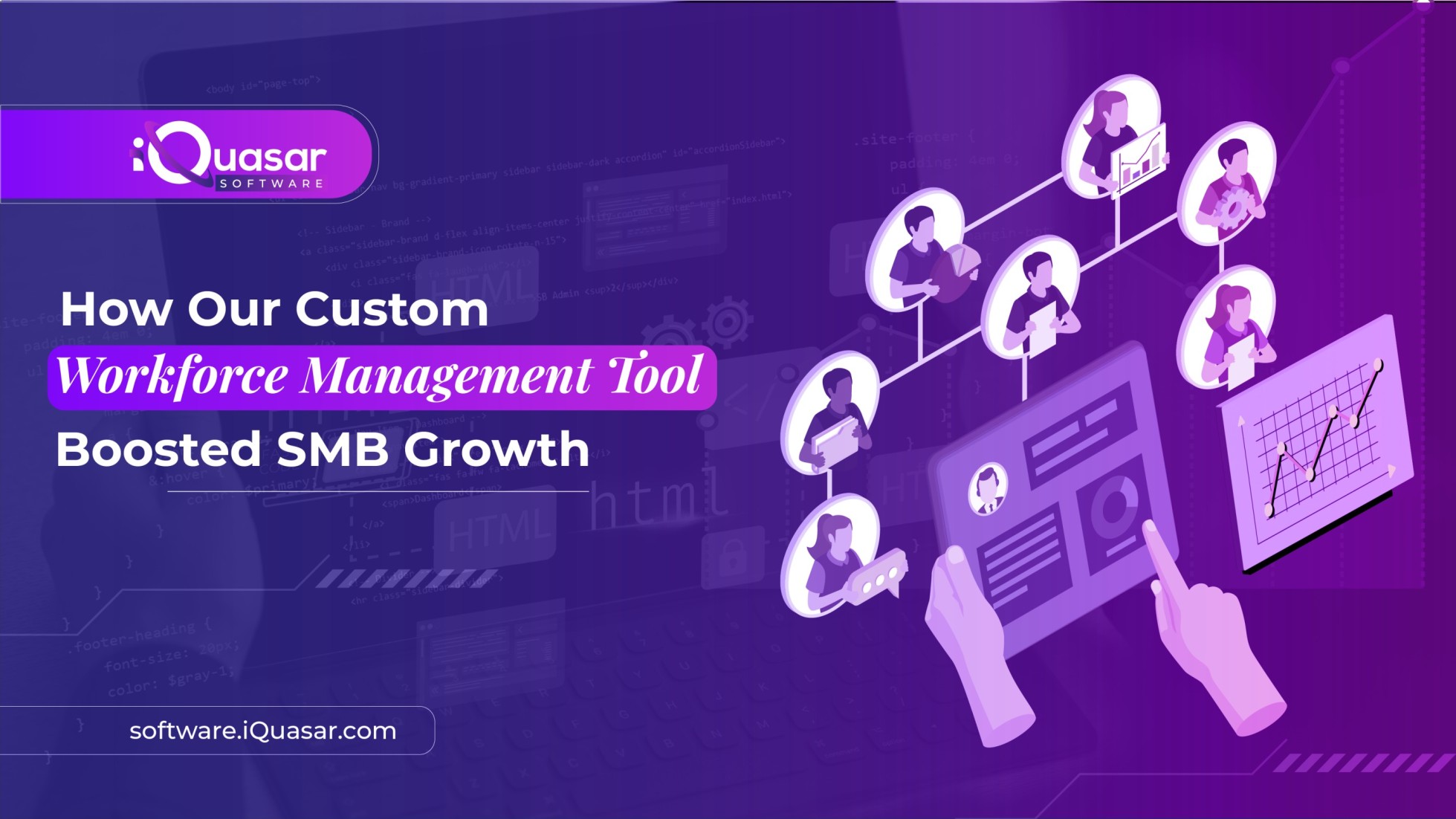
To resolve these issues, iQuasar developed a workforce management tool/platform designed for SMBs in the service sector. But the software wasn’t just a product—it was the result of a thoughtful, problem-led build process:
1. Deep Requirements Gathering
Before a single feature was coded, the software’s creators interviewed all stakeholders. They discovered:
- Leadership didn’t want “more dashboards,” they wanted actionable signals
- Project managers needed real capacity planning, not theoretical Gantt charts
- HR teams wanted performance data tied directly to deliverables
- CEOs cared about early warnings, not just post-mortem reports
These insights directly shaped every module—from client health tracking to dynamic incentive calculation.
2. Rigorous Quality Analysis
The Custom Workforce Management Tool wasn’t built in a vacuum:
- It was tested across real projects from live delivery teams, not mock environments
- Feedback loops were embedded into the build—testing weekly sprints with project managers and HR leads
- Edge cases like staff overlap across contracts and unforeseen project delays were baked into validation testing
This ensured that the solution didn’t just “work”—it worked in the real-world messiness of small businesses.
3. Skilled Development, Business-Aligned
Rather than offshore teams disconnected from user pain points, the custom software solution was developed by a cross-functional team:
- Developers with experience in service delivery operations
- UX designers who sat in on project stand-ups to understand user frustrations
This tight alignment of business context and development skill meant faster iterations—and a tool that “felt right” from Day 1.
Value Created for the Company
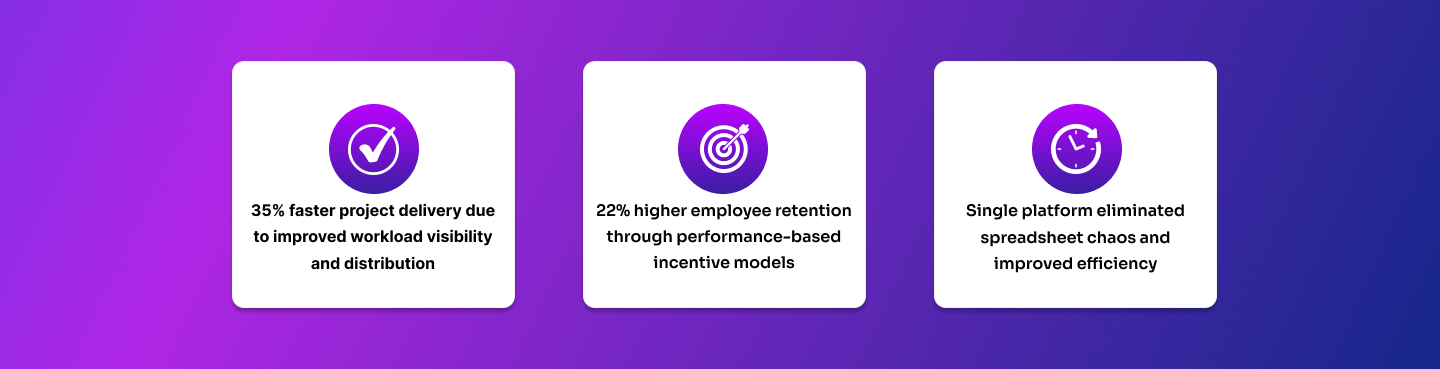
- 35% faster delivery, thanks to clear visibility and better workload distribution
- 22% higher retention, with fairer, performance-based incentive models
- Leadership clarity with real-time, role-specific dashboards
- Improved client satisfaction, driven by proactive account health monitoring
- No more spreadsheet chaos—everything managed from a single platform